
Dynamometry
Marine Applications for Dynamometer Testing
For a variety of vessels and other marine equipment, a dynamometer provides testing equipment used throughout the industry. You can turn to Senat Marine Service to meet your rugged requirements.
Bollard Pull Tests
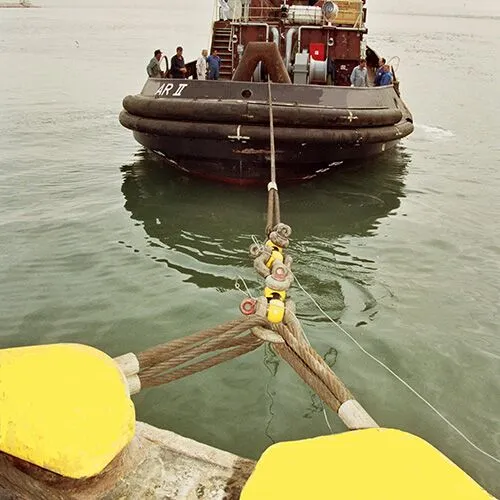
The power output of a ship-assist tug is best described as “thrust developed at zero speed”. In order to meet the requirements of their specialized operation, tug propulsion systems are designed for maximum performance at zero speed in the forward direction. To simulate conditions in which a tug is expected to operate, the tug is tethered to bollards (short steel structures commonly used for mooring ships to the pier) and a load cell is placed on the tethering line. The tug applies tension to the tethering line while the load cell measures the applied load. Having been tethered, zero speed and maximum output is possible.

Quality Controls

Health, Safety and Environment

Training Courses
We have the vission of strengthen a committed relationship with our frequent clients and extend our presentation to each of our new clients, offering our dedication and judgment, through a range of efficient solutions appropriate to their needs.
How we work
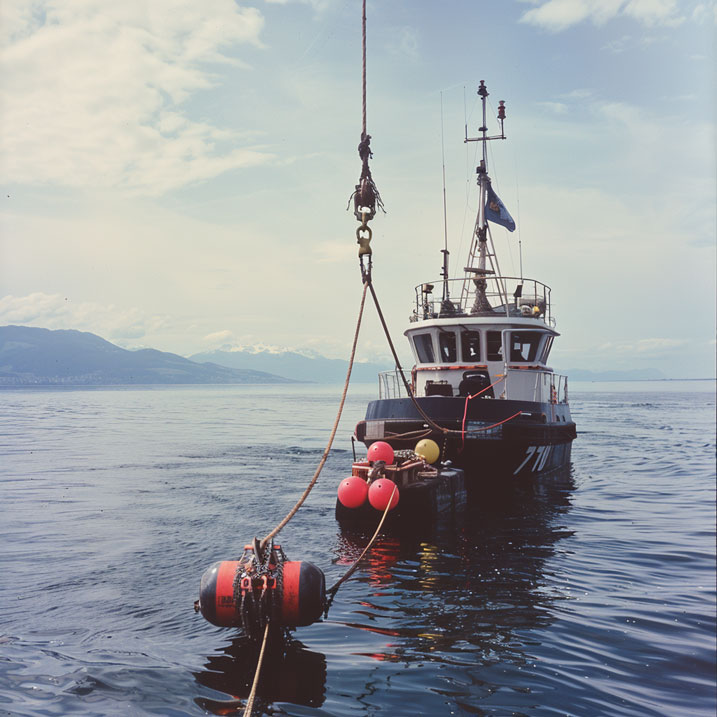
For reliable results, bollard pull tests should ideally be performed in deep water, far from the mouth of a river on a calm day with minimum traffic. Currents or strong winds can potentially falsify readings. In order to ensure that the force is only generated by the interaction of the propeller and surrounding water, sufficient distance should be provided between the tug and pier wall. Rudder angle should be close to zero degrees; it is important to keep conditions as static as possible. Engine power and heading should remain constant and the test should continue until the reading on the load cell settles on a near-constant value for reliable measurement.


Senat Marine Service
Contact
Mobile:+54 11 6126 1525